
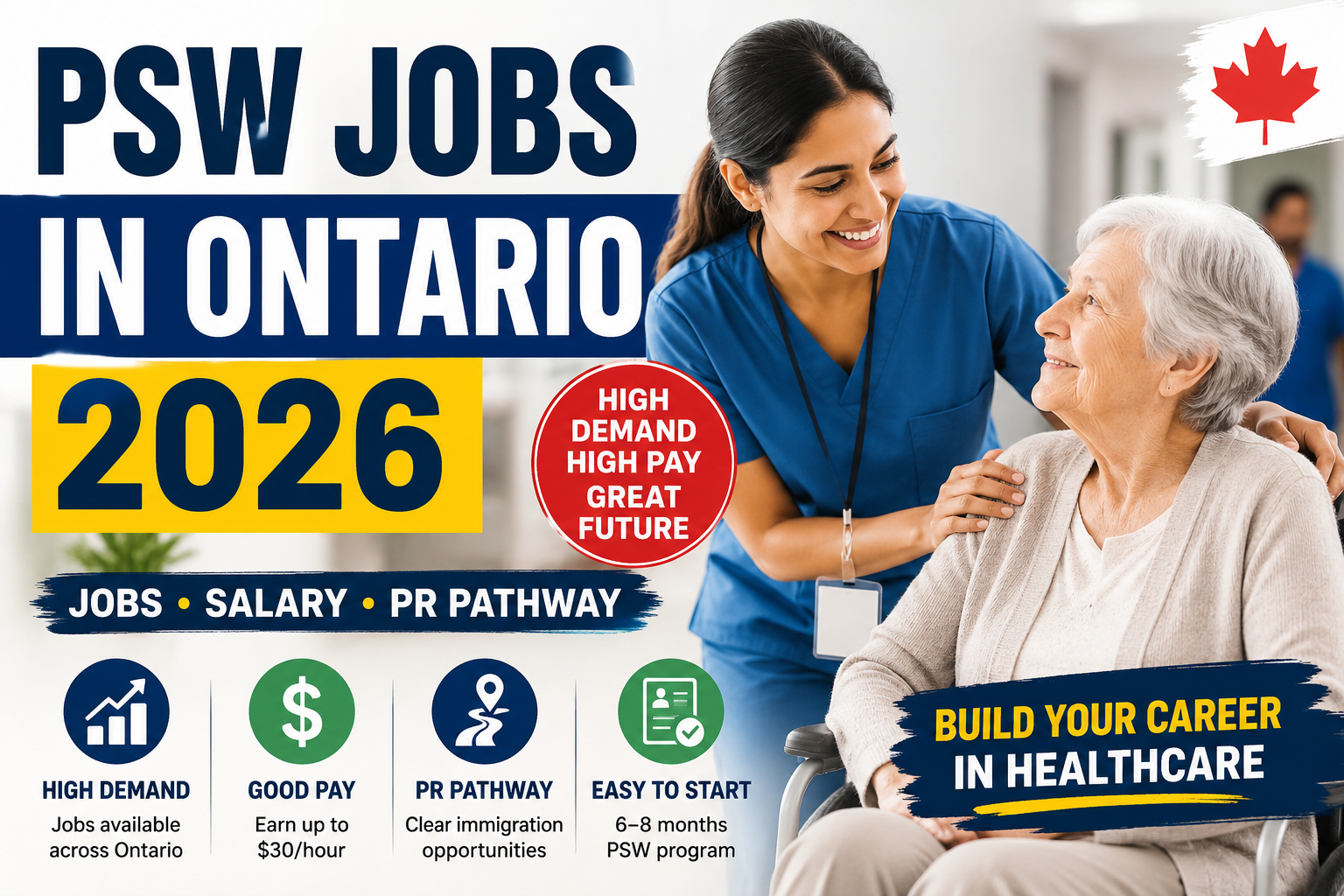
PSW jobs in Ontario 2026 offer high demand, good pay, and PR pathways. Learn salary, requirements, and how newcomers get hired fast.
In 2026, one healthcare job in Ontario is quietly changing the lives of immigrants, students, and career switchers.
It’s not nursing.
It’s not medicine.
It’s Personal Support Worker (PSW) — and demand has never been higher.
Across Ontario, hospitals, long-term care homes, and home care agencies are urgently hiring PSWs. Many employers are offering better pay, faster hiring, overtime hours, and even PR support.
If you’re wondering whether PSW is still worth it in 2026, this guide will answer everything — honestly and clearly.
Why PSW Jobs Are Exploding in Ontario Right Now
Ontario’s healthcare system is under pressure.
- Seniors are living longer
- Hospitals are overcrowded
- Long-term care homes are expanding
- Home care demand has doubled
And there simply aren’t enough workers.
That’s why PSWs are now one of the most in-demand healthcare workers in Ontario — and why employers are hiring year-round.
In many cities, PSW job postings stay open for weeks because demand is so high.
What Does a PSW Actually Do?
A Personal Support Worker helps patients with daily living activities when they can’t manage alone.
This includes:
- Bathing, dressing, and toileting
- Feeding and mobility assistance
- Monitoring basic health changes
- Emotional and companionship support
PSWs work closely with nurses and doctors and often spend more time with patients than any other healthcare worker.
For many families, PSWs are the heart of patient care.
PSW Salary in Ontario (2026 Reality)
Let’s talk money — because this matters.
In 2026, PSW pay in Ontario is better than ever, especially in unionized workplaces.
Average Pay
- Hourly: $19 to $30
- Monthly: $3,000 to $4,800
- Yearly: $38,000 to $58,000
Where Personal Support Workers Earn the Most
- Hospitals
- Unionized long-term care homes
- Private home care (overnight shifts)
Many Personal Support Workers also earn extra income through overtime and night shifts.
Where Are Personal Support Workers Working in Ontario?
They are needed almost everywhere.
The most common workplaces include:
- Long-term care homes
- Hospitals
- Retirement communities
- Home care agencies
- Group homes
Hospitals usually pay more, but long-term care homes hire faster and often help with immigration paperwork.
Best Ontario Cities for Jobs in 2026
If you’re flexible with location, your chances improve even more.
High-demand areas include:
- Toronto & GTA
- Brampton
- Mississauga
- Hamilton
- London
- Niagara Region
- Ottawa
Smaller cities often offer:
- Faster interviews
- More shifts
- Employer support for PR
Can these Jobs Really Help With PR?
Yes — and this is why it is so popular among immigrants.
They are considered essential healthcare workers, making them eligible for multiple immigration pathways.
Top PR Pathways for Personal Support Workers
Ontario Immigrant Nominee Program (OINP)
The Ontario Immigrant Nominee Program allows Personal Support Workers with valid job offers to apply for nomination.
Why this matters:
- No CRS score competition
- Employer-supported
- Faster PR processing
Canadian Experience Class (CEC)
After gaining Canadian work experience, they may qualify under Express Entry.
All permanent residence applications are processed by Immigration, Refugees and Citizenship Canada.
For many newcomers, it is the fastest legal way to build Canadian experience and apply for PR.
How Long Does It Take to Become a Personal Support Worker?
One of the biggest advantages of PSW is speed.
Course Duration
- 6 to 8 months (full-time)
- 9 to 12 months (part-time)
Cost in Ontario
- Domestic students: $3,000–$6,500
- International students: $8,000–$15,000
Some government-funded programs even offer free training with guaranteed jobs.
Is Personal Support Worker Work Hard? The Honest Truth
Yes —it work is physically and emotionally demanding.
You may face:
- Long shifts
- Lifting and mobility support
- Emotional situations
But for many workers, the job security, income stability, and PR opportunity make it worthwhile.
That’s why thousands of newcomers choose PSW every year.
Why So Many Immigrants Choose this in 2026
Here’s the real reason PSW remains popular:
✔ Fast job after training
✔ No licensing exam like nursing
✔ Jobs available everywhere
✔ Strong PR pathways
✔ Opportunity to upgrade to RPN or RN later
Many personal support workers later move into:
- Practical Nursing (RPN)
- Registered Nursing (RN)
- Healthcare management
PSW is often the first step, not the final destination.
How to Get Job Faster in Ontario
To increase your chances:
- Complete a recognized PSW program
- Prepare a Canadian-style resume
- Apply directly to LTC homes and hospitals
- Be open to night and weekend shifts
- Stay consistent — employers hire year-round
Many employers prefer reliable candidates over perfect resumes.
An Important Reality Most PSWs Don’t Know: Scope of Practice, Liability & Career Protection
PSWs Are NOT Nurses — and That Matters
One of the most important things missing from many PSW guides is a clear explanation of scope of practice and legal responsibility. Understanding this is essential if you want a safe, long-term PSW career in Ontario.
PSWs play a vital role, but they are not regulated healthcare professionals like RNs or RPNs. This means:
- You must work strictly within your job description
- You should never perform tasks that are outside your training
- “Helping” beyond your scope can actually put your job and future PR at risk
Many new PSWs unknowingly accept tasks such as:
- Giving medications without authorization
- Performing wound care beyond basic assistance
- Making independent clinical decisions
⚠️ These actions can lead to termination, incident reports, or immigration complications if something goes wrong.
Why Documentation & Communication Are Critical for PSWs
Good PSWs are not just physically supportive — they are excellent observers and communicators.
You must always:
- Report changes in patient condition to nurses
- Document incidents accurately and immediately
- Follow care plans exactly as written
Poor documentation is one of the top reasons PSWs face workplace discipline, even when intentions are good.
Remember:
👉 If it’s not documented, it didn’t happen.
Workplace Injuries & Burnout: The Challenge
Another overlooked topic is injury and burnout.
Common risks include:
- Back injuries from improper lifting
- Shoulder and knee strain
- Emotional exhaustion from long shifts
This is why learning safe lifting techniques, using mechanical lifts, and refusing unsafe work is not weakness — it’s professionalism.
Ontario employers are legally required to provide:
- Proper equipment
- Training
- Breaks
Knowing your rights protects both your health and your career.
Why This Matters for Immigration & PR
For immigrants, this topic is even more important.
A workplace incident, repeated complaints, or termination for unsafe practice can:
- Affect employer support letters
- Delay PR applications
- Impact future healthcare job prospects
PR programs supported by Immigration, Refugees and Citizenship Canada value consistent, clean work history.
Being a professional, rule-following worker strengthens your long-term immigration journey.
Final Advice:
If you want to succeed:
✔ Know your scope
✔ Ask questions early
✔ Document everything
✔ Protect your body
✔ Think long-term, not just about today’s shift
This mindset separates temporary workers from successful who build careers and PR in Canada.
Final Thought: Is PSW Worth It in 2026?
If your goal is:
- Stable income
- Quick employment
- Canadian experience
- Permanent Residency
Then yes — It is still one of the smartest healthcare career choices in Ontario in 2026.
$38K–$66K Personal Support Worker Psw Jobs in Canada, 23 May 2026 | Indeed
It may not be glamorous, but it opens doors — to jobs, stability, and a future in Canada.
PSW Jobs in Ontario 2026: The Work-to-PR Path Most People Miss – brandednurses
Read More on BrandedNurses.com
We publish real, updated guides for:
- PSW & nursing careers
- Immigration pathways
- Salary trends
- Job interviews
- PR strategies for healthcare workers