
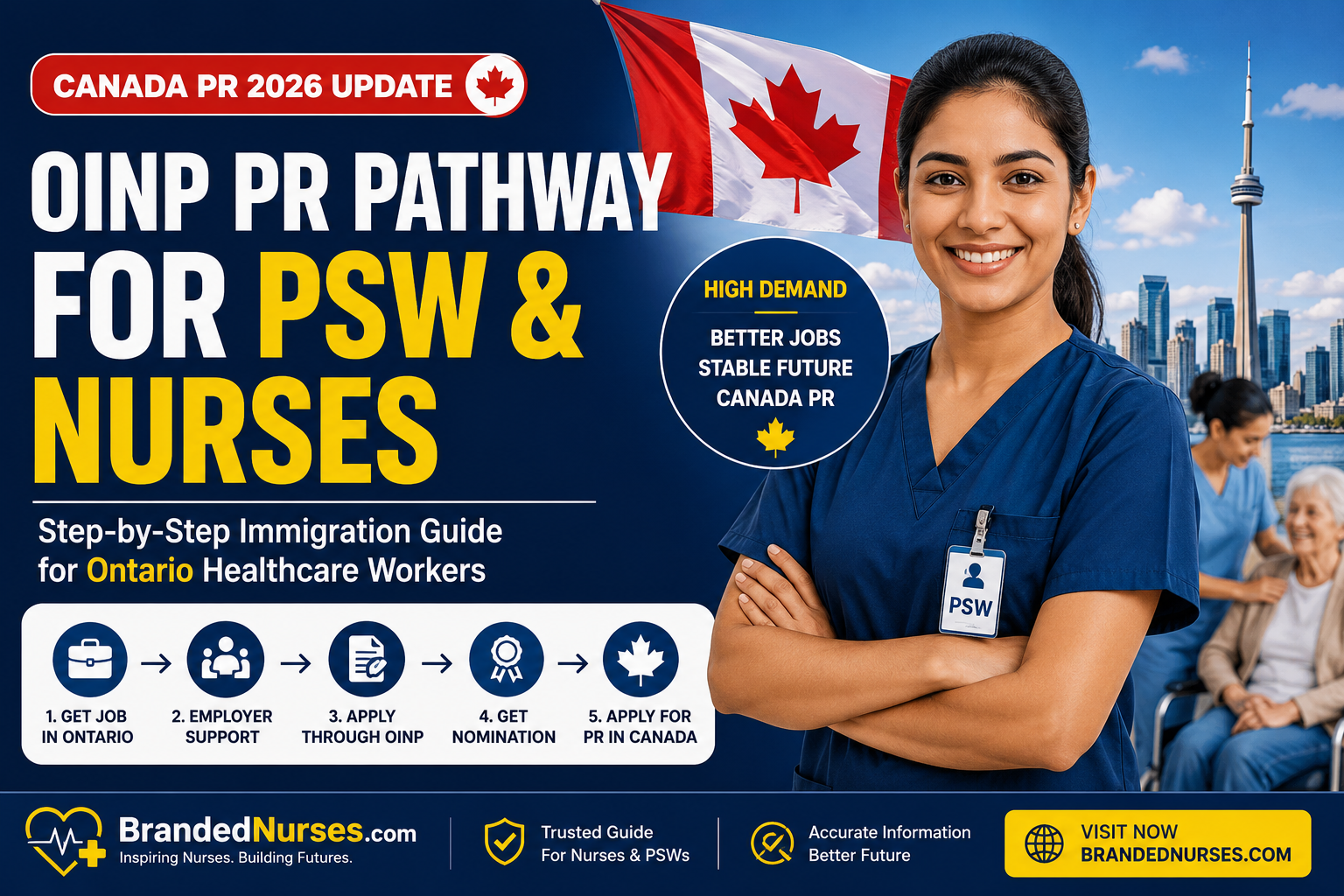
Updated 2026 | Canada Immigration & High-Demand Healthcare Jobs
Something Most PSWs Don’t Realize Yet
If you are working as a Personal Support Worker (PSW) in Ontario — or planning to become one — there is a major opportunity that many people are still missing.
Right now, Ontario is actively depending on PSWs more than ever before.
The healthcare system is under pressure, and immigration pathways are quietly becoming more favorable for PSWs through the Ontario Immigrant Nominee Program (OINP).
👉 And this is not just a job opportunity…
It can become your Permanent Residence (PR) pathway in Canada.
Why PSWs Are Suddenly in High Demand
Across Ontario, hospitals and long-term care homes are struggling to fill essential roles.
PSWs are now needed in:
- Long-term care homes
- Retirement homes
- Home care services
- Hospitals
- Community support programs
👉 This demand is not temporary — it is long-term.
The Advantage Most PSWs Don’t Know
Here is the part most people miss:
👉 PSWs are one of the most accessible healthcare occupations for PR in Canada
Why?
- Lower eligibility barriers
- Employer-driven immigration options
- No high CRS requirement in many cases
- Strong job demand across Ontario
🏥 The Current PR Pathway Are 2026
Most successful candidate follow this simple route:
1️⃣ Get a full-time job in Ontario
2️⃣ Receive employer support
3️⃣ Apply through OINP
4️⃣ Get provincial nomination
5️⃣ Apply for PR in Canada
Handled by Immigration, Refugees and Citizenship Canada (IRCC)
💰 Why This Path Is So Powerful in 2026
This job benefit because Ontario is:
✔ Increasing healthcare hiring
✔ Supporting long-term care staffing
✔ Prioritizing essential workers
✔ Speeding up employer job offer streams
👉 This makes PSW one of the most stable immigration routes in Canada right now
⚠️ The Mistake Many PSWs Make
A lot of applicants lose time because they think:
❌ “It is just a low-skill job, PR is difficult”
But reality is different:
✔ PSWs are on high-demand occupation lists
✔ PR pathways exist specifically for them
✔ Employer support is often enough to start immigration process
👉 The problem is not eligibility — it is lack of information.
How Long Does PR Take?
Typical timeline for PSWs:
- OINP processing: 2–6 months
- PR processing: 6–12 months
- Total: ~10–18 months
👉 This is one of the faster healthcare PR routes in Canada.
Real Question You Should Ask
If your employer offered you PR support tomorrow…
👉 Would you be ready with your documents?
Most people say “no” — and that is exactly why they miss opportunities.
What You Should Do Right Now
✔ Confirm your job category (NOC)
✔ Keep all pay stubs and experience letters ready
✔ Check employer eligibility for OINP
✔ Stay updated on healthcare immigration draws
Because in immigration, preparation wins over luck.
💙 Final Message: Reading This
You are doing one of the most important jobs in Canada’s healthcare system.
And slowly but surely, immigration pathways are recognizing that value.
👉 Your work matters
👉 Your role is needed
👉 Your future in Canada is possible
But only if you stay informed and ready.
🌟 Sometimes the smallest job today leads to the biggest future tomorrow.
Can PSW jobs in Ontario lead to Canadian PR in 2026?
Yes, these jobs in Ontario can lead to Permanent Residency (PR) through programs like the Ontario Immigrant Nominee Program (OINP) and other caregiver-related immigration pathways, depending on eligibility, work experience, and job offer.
What is the average salary of a PSW in Ontario in 2026?
The average salary in Ontario ranges between $18 to $25 per hour, depending on experience, employer, and location.
Which immigration programs support PSW workers in Ontario?
These workers may qualify through:
Ontario Immigrant Nominee Program (OINP)
Rural and Northern Immigration Pilot (RNIP) (if available)
Employer-driven PR pathways
50 CELPIP Writing Task 1 and 2 Templates + Band-9 Sample Answers (Email Writing ) – brandednurses
SPEP-RN: CNO approved organizations 2024 – brandednurses
Discover 900 Full Time Psw Jobs and Work Opportunities in Ontario | Indeed